Tessellation
Tessellation means converting smooth CAD surfaces into a triangle mesh. Linear deflection controls how far the triangle mesh is allowed to deviate from the true CAD surface. Smaller linear deflection = more accurate mesh, more triangles, larger OBJ. Example: linear deflection = 0.10 mm. means the generated triangle surface should stay within roughly 0.10 mm of the original CAD surface. Angular deflection controls how much the triangle normals are allowed to change between adjacent pieces of a curved surface. Smaller angular deflection = smoother-looking curved/rounded surfaces, more triangles. example: angular deflection = 0.25 rad ≈ 14.3°
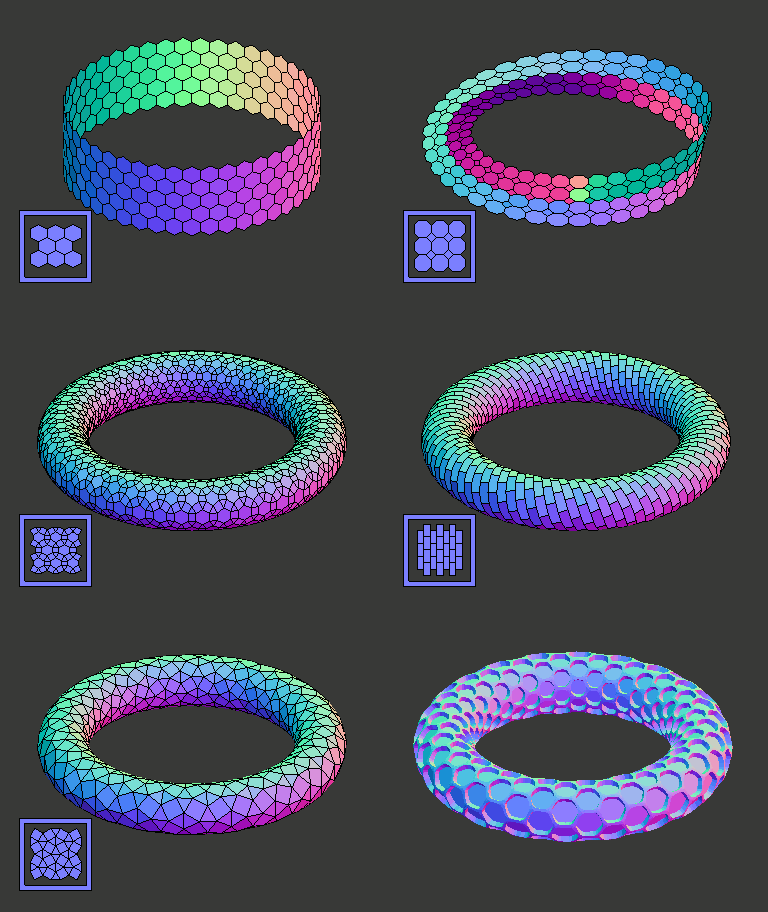 Tesslleating 3D meshes into triangles, hexagons, and other shapes